

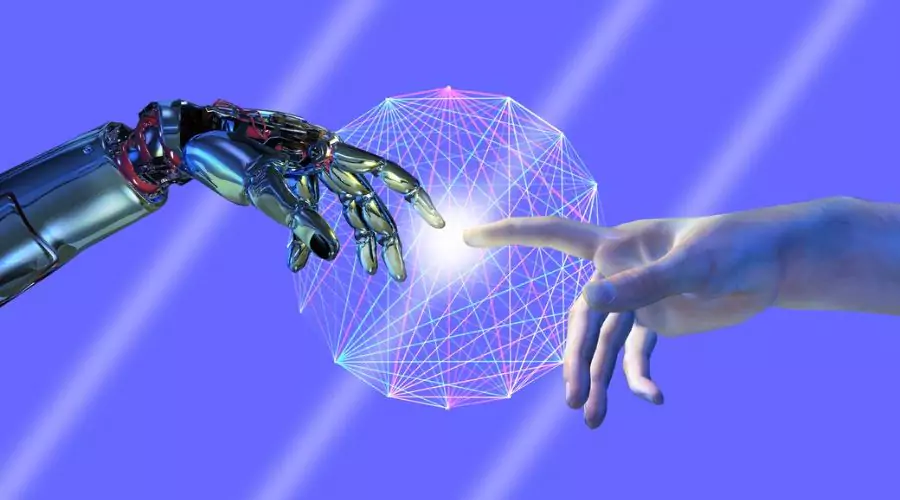
Artificial Intelligence (AI) is a topic that today defines a new age of technology and changes the paradigm in which modern society operates. This article is devoted to the consideration of the essence and prospects of artificial intelligence, its impact on various spheres of life and the opportunities it opens up for humanity.
Artificial Intelligence: Definition and Essence
1.1 Definition of AI
Artificial intelligence is a branch of computer science that studies the creation of programs and systems with intellectual abilities similar to those of humans. The essence of AI is to give machines the ability to learn, understand, analyze and make decisions.
1.2 History and Development of Artificial Intelligence
The ideas of artificial intelligence originated in the Middle Ages, but the term “artificial intelligence” itself became widely known in the 20th century. Over the past decades, thanks to the growth of computing power and the development of algorithms, AI has been developing rapidly, providing new opportunities and solving tasks that were previously considered impossible.
1.3 Key Aspects of AI
Artificial intelligence encompasses various aspects such as machine learning, natural language processing, computer vision and many others. Machine learning, for example, allows systems to improve their performance by interacting with their environment and learning from the data they receive.
Application of Artificial Intelligence in the Modern World
2.1 Impact on Business and Economy
Artificial intelligence has become a real catalyst for changes in business. Automation of processes, forecasting of demand, analysis of huge volumes of data are just a few aspects in which AI proves to be useful for companies. Intelligent systems help make effective decisions and increase productivity.
2.2 Improvement of Education and Science
AI opens up new opportunities in education and science. In training systems, it can adapt to the individual needs of the student, providing a personalized approach to learning. In science, AI helps in analyzing complex data and solving scientific problems.
2.3 Medicine and Health
In the field of medicine, AI is becoming an integral part. From the diagnosis of diseases to the development of new drugs, intelligent systems make a significant contribution to improving health and bringing treatment to a new level of efficiency.
Ethics and Challenges Related to Artificial Intelligence
3.1 Ethical Considerations
As the use of AI grows, ethical questions arise. For example, how to ensure transparency and responsibility when using intelligent systems? How to avoid discrimination in the decision-making process?
3.2 Threats to Workplaces and Society
The automation that accompanies the introduction of AI can lead to the automation of a number of jobs. This raises questions about social responsibility and the need to retrain the workforce for the modern labor market.
3.3 Security and Cyber Threats
With the development of AI, the likelihood of cyber threats increases. Intelligent systems can become the object of attacks and abuses, which requires careful study of aspects of cyber security and privacy protection.
Conclusion: Artificial Intelligence as an Engine of Innovation
Artificial intelligence opens a new stage in the evolution of technology, revolutionizing the way we live and work. It becomes a key component in business, education, medicine and other fields. However, with its growth, new ethical and social challenges arise that require attention and advanced solutions.
The development of AI is concerned with security, ethics and social justice issues. Despite this, one cannot take one’s eyes off the way these technologies can lead to significant achievements and improvements in the quality of life.
Therefore, artificial intelligence is not only the key to unlocking new opportunities, but also a challenge for the development of effective regulatory mechanisms and ethical standards. With these factors understood and taken into account, we can use artificial intelligence to improve the world and promote innovation.
Other articles

The best solutions for your yard: Outdoor furniture
Staying Healthy: Essential Health Tips for Kids